Titanfidget
Cart 0
  • Home
  • Products
    • Fidget Ring
    • Fidget Slider
    • Fidget Spinner
    • Fidget Toy Gun
    • Most popular
  • About Us
  • Contact Us
  • News
My Account
Log in Register
Australia (AUD $)
Austria (EUR €)
Belgium (EUR €)
Canada (CAD $)
Czechia (CZK Kč)
Denmark (DKK kr.)
Finland (EUR €)
France (EUR €)
Germany (EUR €)
Hong Kong SAR (HKD $)
Ireland (EUR €)
Israel (ILS ₪)
Italy (EUR €)
Japan (JPY ¥)
Macao SAR (MOP P)
Malaysia (MYR RM)
Netherlands (EUR €)
New Zealand (NZD $)
Norway (USD $)
Poland (PLN zł)
Portugal (EUR €)
Singapore (SGD $)
South Korea (KRW ₩)
Spain (EUR €)
Sweden (SEK kr)
Switzerland (CHF CHF)
United Arab Emirates (AED د.إ)
United Kingdom (GBP £)
United States (USD $)
Australia (AUD $)
Austria (EUR €)
Belgium (EUR €)
Canada (CAD $)
Czechia (CZK Kč)
Denmark (DKK kr.)
Finland (EUR €)
France (EUR €)
Germany (EUR €)
Hong Kong SAR (HKD $)
Ireland (EUR €)
Israel (ILS ₪)
Italy (EUR €)
Japan (JPY ¥)
Macao SAR (MOP P)
Malaysia (MYR RM)
Netherlands (EUR €)
New Zealand (NZD $)
Norway (USD $)
Poland (PLN zł)
Portugal (EUR €)
Singapore (SGD $)
South Korea (KRW ₩)
Spain (EUR €)
Sweden (SEK kr)
Switzerland (CHF CHF)
United Arab Emirates (AED د.إ)
United Kingdom (GBP £)
United States (USD $)
Titanfidget
Account Cart 0
  • Home
  • Products
    • Fidget Ring
    • Fidget Slider
    • Fidget Spinner
    • Fidget Toy Gun
    • Most popular
  • About Us
  • Contact Us
  • News

Search our store

Titanfidget
Account Cart 0
News

Why Are Fidget Toys So Expensive? Cost Breakdown + Are They Worth It (2026)

by MAYISIKAI on Apr 16, 2026

You've found a metal fidget toy you like. Then you see the price: $75. $120. $200. And you think: it's a small piece of metal. Why does it cost this much? And is it actually worth it?

Both questions deserve honest answers. This guide covers the real manufacturing costs behind premium fidget tools — and then goes further to tell you exactly what each price point delivers in practice, so you can make a smart decision.

⚡ Quick Answer

Premium metal fidget toys are expensive because of CNC machining costs, material grade, mechanism quality, and finishing processes. A single CNC-machined stainless steel component can cost $15–40 in machining alone. Whether that's worth it depends on how you use it: for daily therapeutic use, the $40–80 range delivers the best price-to-performance ratio. For EDC collectors, premium pricing is often rational on a cost-per-year basis.


📋 Table of Contents

  1. CNC Machining: The Biggest Cost Driver
  2. Material Costs: What Grade of Metal?
  3. Mechanism Costs: Bearings and Magnets
  4. Surface Finishing
  5. Production Volume
  6. Why Plastic Toys Cost So Much Less
  7. Why $25 vs $75 vs $150 Feels Completely Different
  8. Are Expensive Fidget Toys Actually Worth It?
  9. For ADHD Users: Does Price Affect Therapeutic Value?
  10. Where Diminishing Returns Kick In
  11. The Longevity Calculation: Cost Per Year
  12. What Should You Actually Spend?
  13. FAQ

🔧 1. CNC Machining: The Biggest Cost Driver

CNC (Computer Numerical Control) machining cuts a solid block of metal into a precise shape using computer-controlled tools. It's the dominant manufacturing method for premium metal fidget toys — and it's expensive.

CNC machines cost $50–$200+ per hour to operate. A single fidget slider body may require 15–45 minutes of machine time. At $100/hour, that's $25–75 in machining alone — before material, finishing, assembly, or packaging.

Precision fidget mechanisms require tight tolerances — often ±0.01–0.05mm. Tighter tolerances mean slower cutting, more tool changes, and higher rejection rates. This is why two fidget toys that look identical can differ 5–10x in price — the difference is inside the tolerances, not the appearance.

👉 See CNC-machined sliders: Shark Mechanical Fidget Slider — $89.00 | Triple Magnetic Slider — $24.90


🔩 2. Material Costs: What Grade of Metal?

Stainless Steel (304/316) — The workhorse of premium fidget tools. Corrosion-resistant, dense (7.99 g/cm³), and takes a beautiful finish. Raw material costs $8–15/kg, but a slider body may start as a block 3–5x the finished weight — material waste is a real cost factor.

Titanium (Grade 5) — Density 4.43 g/cm³ — 44% lighter than steel at higher strength. Raw material costs 5–10x more than stainless steel per kg, and machining costs are higher due to poor thermal conductivity requiring slower cutting speeds. For EDC carry, titanium's strength-to-weight ratio is genuinely superior. For desk use where weight is an asset, the advantage is less clear.

Copper and Brass — Denser than steel, develop a natural patina collectors prize. Softer metals that scratch more easily — collector materials, not daily-abuse materials.


⚙️ 3. Mechanism Costs: Bearings and Magnets

Bearings (Spinners) — Budget spinners use ABEC-3 bearings ($0.50–1.50). Quality spinners use ABEC-7 ($2–5) or ceramic hybrid ($8–25). Full ceramic bearings cost $30–60. The difference in spin time, noise, and service life is substantial.

Neodymium Magnets (Sliders) — Quality sliders use N35–N52 rated magnets. N52 costs significantly more than N35 and produces more satisfying snap and resistance. Budget sliders use weaker magnets — which is why they feel less satisfying and lose their action faster.

👉 Explore magnetic precision sliders: Shark Mechanical Fidget Slider — $89.00 | Triple Magnetic Slider — $24.90


✨ 4. Surface Finishing

  • Bead blasting — Uniform matte texture, hides machining marks, improves grip.
  • Anodising — Hard oxide layer. For titanium, produces vivid colours through light interference without dyes.
  • PVD coating — Extremely hard vacuum-deposited layer. Adds $10–30+ per unit but significantly improves durability.
  • Hand finishing — Polished edges, mirror faces. Labour-intensive, cannot be automated.

📊 5. Production Volume: Why Small Batches Cost More

Mass-market fidget toys are produced in quantities of tens of thousands — setup costs are negligible per unit. Premium metal fidget tools are typically produced in dozens to a few hundred units per run. Setup costs represent a larger fraction of per-unit cost, material purchasing is at smaller-quantity pricing, and quality control is often 100% inspection vs statistical sampling.


🧴 6. Why Plastic Toys Cost So Much Less

Injection-moulded plastic parts cost cents per unit at scale. The tradeoffs: minimal weight and proprioceptive feedback, lower dimensional precision, faster wear, and degradation under UV and temperature extremes. The low price of plastic fidget toys reflects their low manufacturing cost — not a pricing strategy by metal manufacturers.

👉 Related: Metal vs Plastic Fidget Toys – Which Is Better for Focus? →


💰 7. Why $25 vs $75 vs $150 Feels Completely Different

Factor $25 metal toy $75 metal toy $150+ premium
Material Zinc alloy / basic aluminium Stainless steel (304) Titanium / exotic alloys
Mechanism Basic magnets / ABEC-5 N42+ magnets / ABEC-7 N52 magnets / ceramic bearing
Tolerances Loose (±0.1mm+) Tight (±0.05mm) Ultra tight (±0.01mm)
Finish Basic tumble or bead blast Bead blast + quality anodise PVD / hand finish / anodise
Feel after 3 months Noticeably worn Stable, consistent Same as new
Expected lifespan 1–3 years 5–10 years Effectively indefinite

🏆 8. Are Expensive Fidget Toys Actually Worth It?

Now that you understand why they cost more, the real question: is the premium justified?

The honest answer is: yes, up to a point — and then no.

Where Price Genuinely Improves Performance

  • Action consistency — Tighter tolerances eliminate dead spots and inconsistent resistance that interrupt the meditative loop fidgeting creates.
  • Noise level — Higher-quality bearings and tighter tolerances produce significantly less noise. A budget spinner in a quiet office is a social liability. A premium magnetic slider is genuinely inaudible.
  • Longevity of action — Budget bearings degrade within months of daily use. Quality bearings maintain their action for years.
  • Weight distribution — CNC machining allows designers to precisely control where mass is concentrated, producing a balance that die-cast tools rarely achieve.

Where Price Does NOT Improve Performance

  • Therapeutic effect — The neurological benefit of fidgeting doesn't scale linearly with price. A $40 stainless steel slider provides the same fundamental therapeutic mechanism as a $200 titanium one.
  • Focus improvement — No peer-reviewed research suggests more expensive fidget tools produce greater cognitive benefits. The research focuses on the presence or absence of movement, not the quality of the tool.

The steepest value gains happen in the $0–50 range. The jump from plastic to metal is transformative. Beyond $100, you're paying for incremental improvements that matter to some users and not at all to others.


🧠 9. For ADHD Users: Does Price Affect Therapeutic Value?

For adults using fidget tools to manage ADHD, two variables determine effectiveness: tactile complexity and engagement maintenance.

Higher-quality tools provide richer tactile feedback, which is more effective at occupying the motor cortex without demanding conscious attention. More importantly, cheaper tools with inconsistent action tend to lose their appeal faster — leading to abandonment. A tool that feels genuinely satisfying every time maintains its therapeutic utility longer.

The practical implication: for ADHD adults using a fidget tool daily, investing in mid-range to premium quality ($35–80) is likely to produce better long-term outcomes than buying cheap and replacing frequently. However, the jump from $80 to $200+ is unlikely to produce additional therapeutic benefit for ADHD management specifically.

👉 Deep dive: Do Fidget Toys Actually Help ADHD? The Science →


📉 10. Where Diminishing Returns Kick In

Price Range Performance Gain Value Assessment
$0 → $20 Significant (plastic → metal) ✅ High value jump
$20 → $50 Meaningful (die-cast → CNC) ✅ Strong value
$50 → $100 Noticeable (entry CNC → premium CNC) 🟡 Good for daily users
$100 → $200 Subtle (steel → titanium) 🟡 Justified for EDC collectors
$200+ Marginal (premium → boutique) 🔴 Collector/aesthetic value only

📅 11. The Longevity Calculation: Cost Per Year

The most useful framework: cost per year of satisfying use — not sticker price.

Tool Price Expected Lifespan Cost Per Year
Plastic spinner $8 3–6 months $16–32/year
Zinc alloy slider $25 12–18 months $17–25/year
CNC steel slider $45 3–5 years $9–15/year
Premium steel slider $80 5–10 years $8–16/year
Titanium EDC slider $160 10+ years $16/year

The counterintuitive finding: a quality CNC steel slider in the $40–80 range is often the most economical choice for daily users. The worst value is the $15–25 die-cast zone — better than plastic but degrades faster than proper CNC alternatives.


🏆 12. What Should You Actually Spend?

Spend $30–60 if: You're buying your first metal fidget toy, primarily use it for ADHD or anxiety at work, or aren't sure yet what feedback type you prefer.

Spend $60–120 if: You use a fidget tool 4+ hours daily, want something that lasts 5+ years, or work in a quiet environment where noise level is critical.

Spend $120+ if: You're an EDC collector who values materials and craftsmanship intrinsically, want titanium's weight-to-strength ratio for all-day carry, or are buying a gift for someone who will appreciate the quality.

Don't spend under $20 if: You're an adult using fidget tools therapeutically, want the tool to last more than a few months, or work in a professional environment.

🥉 Best value entry: Triple Magnetic Fidget Slider — $24.90 | CNC stainless steel, N-grade neodymium magnets.

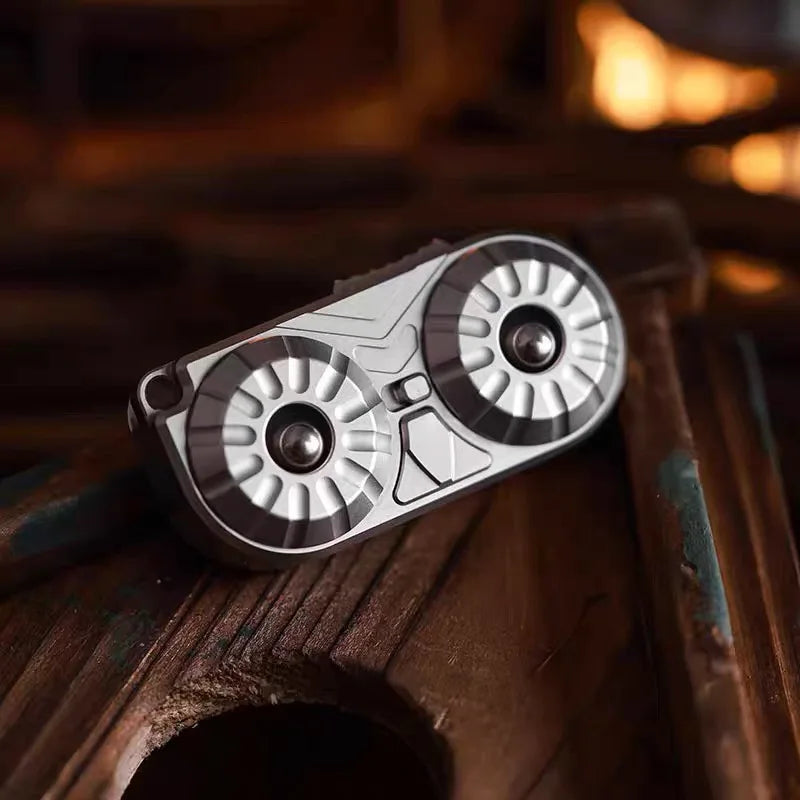
🥇 Best daily carry: Shark Mechanical Fidget Slider — $89.00 | CNC stainless steel, 3-stage magnetic feedback.

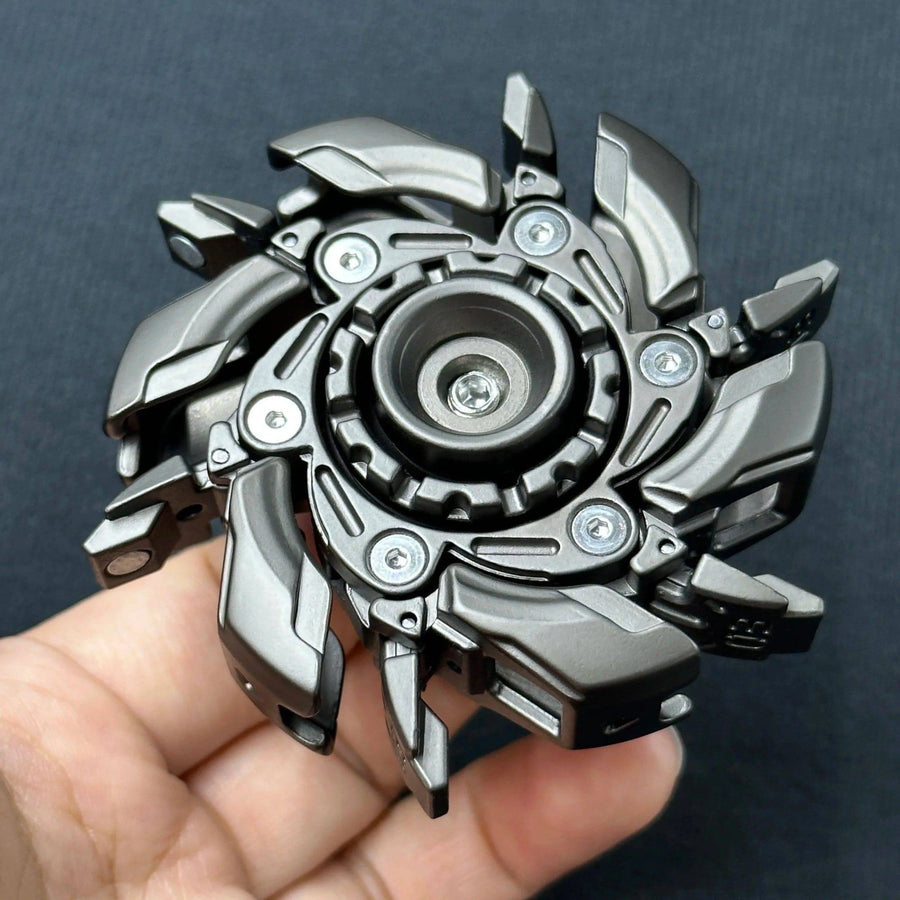
🌀 Best premium spinner: RageBurst 08 — $75.00 | 172g stainless steel, deployable armor mechanism.

Explore the full TitanFidget collection →


💬 13. FAQ

Are expensive fidget toys actually better?
Yes, up to a point. The jump from plastic to quality metal is transformative. The jump from mid-range CNC to boutique titanium is real but incremental. For most therapeutic users, the $30–60 range delivers 80–90% of the performance of tools costing 3–5x more.

Why do metal fidget toys cost so much more than plastic ones?
CNC machining a stainless steel component costs $15–50+ per piece in machine time alone. Injection-moulded plastic parts cost cents per unit at scale. The price difference reflects real manufacturing cost differences, not arbitrary markup.

Do more expensive fidget toys help more with ADHD?
Not significantly beyond the mid-range. The therapeutic mechanism is present in any quality metal fidget tool. Premium pricing improves consistency and longevity, which matters for long-term use, but doesn't fundamentally change the neurological effect.

Is titanium worth it for a fidget toy?
For EDC collectors and daily carry enthusiasts: often yes. For desk users who want therapeutic benefit: probably not necessary. A quality stainless steel tool delivers equivalent therapeutic value at significantly lower cost.

What is the best value price point for a metal fidget toy?
For most adults, the $40–80 range offers the best price-to-performance ratio — real stainless steel, quality mechanism, and a finish that holds up to years of use.

How long should a quality fidget toy last?
A properly made CNC-machined metal fidget toy should last 3–10 years of daily use. Budget plastic tools typically degrade noticeably within 3–6 months.


👉 Back to: Best Fidget Toys for Adults 2026 – The Ultimate Complete Guide →

👉 Related: Metal vs Plastic Fidget Toys →

👉 Related: How Long Do Fidget Toys Last? →

👉 Related: How to Choose Your First Metal Fidget Toy →


📚 References

  • Hartanto, T. A., et al. (2016). A trial-by-trial analysis reveals more intense physical activity is associated with better cognitive control performance in ADHD. Child Neuropsychology, 22(5), 618–626.
  • Rapport, M. D., et al. (2009). Hyperactivity in boys with ADHD: A ubiquitous core symptom or manifestation of working memory deficits? Journal of Abnormal Child Psychology, 37(4), 521–534.
  • Kalpakjian, S., & Schmid, S. R. (2014). Manufacturing Engineering and Technology (7th ed.). Pearson.
Tags: EDC, fidget toys, manufacturing, metal fidget, pricing, quality
Previous
Roller Fidget vs Slider Fidget: Which Is Better for Focus, ADHD & Office Use? (2026)
Next
Fidget Roller vs Slider vs Scroller: Which Actually Helps ADHD & Anxiety?

Related Articles

Fidget Roller vs Slider vs Scroller: Which Actually Helps ADHD & Anxiety?

Roller Fidget vs Slider Fidget: Which Is Better for Focus, ADHD & Office Use? (2026)

Roller Fidget vs Slider Fidget: Which Is Better for Focus, ADHD & Office Use? (2026)

Best Quiet Fidget Toys for Work & Meetings 2026 — Silent, Tested, Office-Approved

Best Quiet Fidget Toys for Work & Meetings 2026 — Silent, Tested, Office-Approved

Tags

  • ADHD
  • anxiety
  • bearing maintenance
  • beginner
  • buying guide
  • care guide
  • cleaning
  • comparison
  • desk toys
  • durability
  • EDC
  • everyday carry
  • fidget slider
  • fidget spinner
  • fidget toys
  • fix guide
  • focus
  • hub page
  • maintenance
  • manufacturing
  • material quality
  • meetings
  • mental health
  • metal fidget
  • metal fidget toys
  • office
  • pricing
  • quality
  • quiet fidget
  • roller fidget
  • sensory tools
  • silent fidget
  • stainless steel
  • stress relief
  • titanium
  • troubleshooting

Let’s get in touch

Sign up for our newsletter and receive 15% off your first order

Shop

  • Home
  • Products
  • About Us
  • Contact Us
  • News

Company

  • My account
  • Contact Us
  • Shopping
  • Privacy Policy
  • Shipping Policy
  • Refund Policy
  • Terms of Service
Payment options:
  • American Express
  • Apple Pay
  • Diners Club
  • Discover
  • Google Pay
  • Maestro
  • Mastercard
  • Shop Pay
  • Union Pay
  • Visa
© TitanFidget 2025
This website uses cookies to ensure you get the best experience on our website. Learn more

Shopping Cart

Your cart is currently empty.
Add note for seller
Estimate shipping rates
null
Subtotal $0.00
View Cart